

The advice I'm giving my kids as they go back to school.
↪ Pay attention to your arrows.

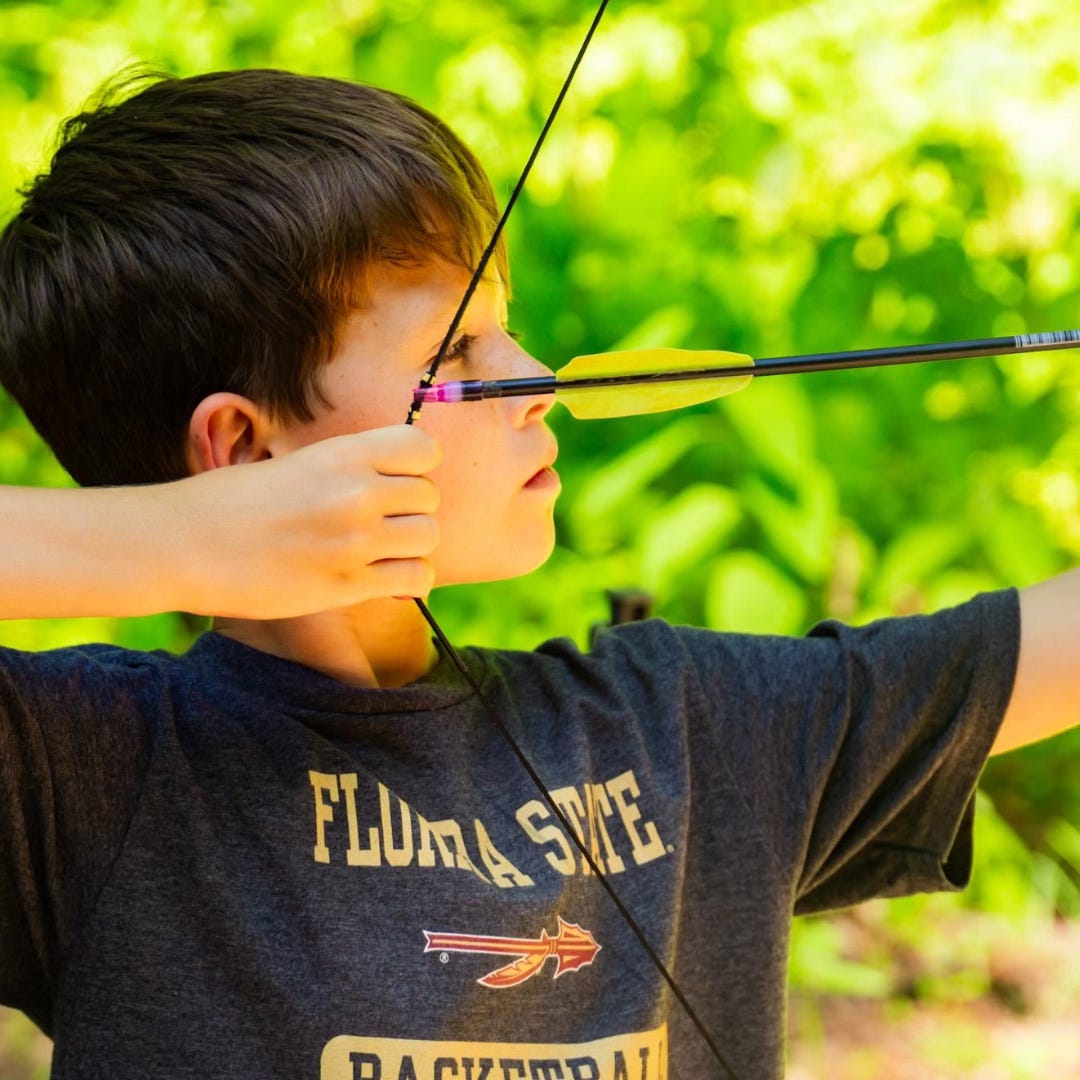
My son Tyler (9) is obsessed with Rubik’s cubes. He’ll play with one for hours, moving the colors this way and that, trying to figure out the patterns to crack the code once and for all (of course a child of mine would be obsessed with a toy about organizing and order).
I love watching him try to solve his Rubik’s cube, and I’m proud of him for his tenacity. Rubik’s cubes are hard—I can’t solve them!—and this kid just puts his head down and keeps going. And I encourage him to keep trying, too, but not so he can finally solve the puzzle. That’s not the point. I encourage him to pay attention to what he pays attention to. Because I want him to follow his arrows.
↪ So, what is an arrow?
Well, let’s back up a little. Sometimes I think my days would be a tad easier if there were a Google Maps for Life, something to tell you “Turn left at This Internship” or “Make a U-Turn at This Boyfriend” or “There’s an object in the road (and it’s called your ego).” How much easier would everything be if something told you where you needed to go for your life to reach its fullest potential (in the areas of both happiness and success)? That would be nice. But that’s not how life works. Sadly.
Instead, I think we have arrows — the little signs that point us to where we’re supposed to go. They’re the natural, organic interests we have in something that give our talents some direction.
For example:
I loved to read as a kid. → I followed my heart, majored in English, and became an author.
I loved to spending time decluttering, reorganizing, and rearranging my room as a kid. (Strange but also . . .) → I created a business all about simplifying life and spaces.
I love mysteries and thrillers, always have. → As an adult, I seek out ways to solve problems, build bridges between people, and map ways to get things done.
I don’t think our arrows are arbitrary; I think they are signs pointing toward something. Faithfully, I believe an arrow is something God’s put in our lives to point us toward where He’d like us to go. Tyler loves solving Rubik’s cubes, which could lead him to all sorts of things: joining chess club, or a board game group. Maybe he’ll enjoy diving into higher-level math classes, or engineering, or managing out operations for a business. Or… maybe this arrow will point him towards fixing a broken toy for his own little boy someday.
Now, do I tell him about all of these potential paths? Sometimes. I try to balance giving him information with making sure he feels the freedom to follow his arrows in his own way. More than anything, I just want him to know that he’s special and unique, that he has gifts and talents, and that perhaps his interests have something to tell him (even if he [or others] might think they are different or even “weird”).
↪ How do you know what your arrows are?
The first thing my kids asked me when I started talking about arrows (besides “How many arrows can one person have? Is there such a thing as infinite arrows?? What color are the arrowwssss?” omg…) is “Mom, how do I know what my arrows are?” Which is a very good question. And this is what I say.
Think about what you’re naturally good at. Listening? Soccer? Math problems? Digesting difficult information and saying it in a clear way? Knowing what’s wrong with your computer and how to fix it?
Is there something that other people say you’re good at? Being a good friend? Drawing animals? Explaining science homework?
And think about what you naturally do when you have some free time, the activities you enjoy. Do you like to read books? Bake brownies? Ride your bike down the hill in the neighborhood? Play video games?
Now, try to lean into those things. Keep following the arrow, keep walking the path it’s taking you on and see where it goes.
For example: Caroline loves pigs. Why? I don’t know! But that girl loves them. Along with his Rubik’s cube obsession, Tyler also loves his stuffed monkey, Kiki. Brady loves sports and has a crazy ability to memorize sports stats. All three of them love to travel (which is fun for their parents!).
What does this all mean? Heck, I don’t know! But I bet one day, we’ll find out. :) There’s part of me that wonders if these arrows are pointing them toward things that will help them rack up the so-called “10,000 hours” to mastery of a specific skill. Having that kind of skill level is rare in this world, especially when our attention is becoming so increasingly fractured.
Our arrows are important to pay attention to when we’re little, but also as we get older. Side note: that doesn’t meant that every interest needs to be monetized or mastered . . . just that it’s important to take note of them. I think they’re like puzzle pieces that will eventually add up to become a picture who we were made to be.
Sometimes it’s a little easier to see what your arrows are pointing when you have a little road behind you, where you can look back with hindsight and see if some roads worked well for you and if some didn’t. And speaking of, I want you to know something else I tell my kids all the time:
↪ It’s okay to turn around and follow a different arrow. It’s okay to get lost and need to find your way again. It’s going to happen.
Sometimes you’ll go down a road that leads you somewhere unexpected, and that particular brand of unexpected might not be great for you longterm—and sometimes it will. Either way, you learn a lot on the journey.
One of my first jobs out of school was as the executive director of a nonprofit here in Pensacola. Was I ready for that kind of role when I was that young? Maybe not as ready as I would be now. But wow, did I learn about how to run an organization and how to lead people (while making so many mistakes along the way—which were valuable lessons, for sure!). Obviously that job didn’t end up being my forever job, but I took all the lessons I learned there and applied them to Simplified when we started growing beyond my guest bedroom.
↪ Also, there will be arrows in your life that you don’t know about yet. And that’s good! So try new things!
You are not a fully formed person when you’re nine years old and trying to solve a Rubik’s cube. The wonderful thing about getting older is that you’ll try new things and discover talents and interests you didn’t know you had. I mean, think about all the things we have in our lives today that didn’t exist thirty years ago when we were kids. (like this very platform you’re reading on!)
So I try to tell my kids to remember that while they have talents and interests that will serve them well in their lives, they also need to put themselves out there and try new things. Caroline’s doing that this year—instead of cheer, she’s trying basketball. I’m so proud! Because even if she doesn’t like it as much as cheer, she tried something new and now she’ll know what she prefers. That’s also some valuable info. Our arrows can tell us a lot, if we have the courage and awareness to follow them—no matter if we’re nine or ninety-nine.
🧵 What arrows have you followed in your own life? Where have they led you?
📖 Like this post? You might like these too!


Such a good lesson for children and for even us as adults. I always loved reading and writing and storytelling as a kid and now I get to do that for a living as a journalist. I also love the idea of your arrows changing as you get older. Wonderful life lesson!
I love music! Always have, always will. I started piano at 5 and French Horn at 12. I joined band in 6th grade. Following that interest has lead me to some of my best and closest friends. They continue to love and support me now at age 39. I still play horn at church and in a community band, which has given me a way to use my musical gifts to serve others. I never take that for granted. ❤️